



Are mail order brides legal? Yes, and the answer is clearer than most people expect. In the U.S., international marriage brokering is a regulated industry, not a legal gray zone. Making mail order bride legal means following two federal laws and a well-established visa process, all of which USCIS handled for 56,382 fiancé visa petitions in 2024, a 12-year high. What you’ll find below: the exact laws that govern the process, how immigration works step by step, where restrictions exist globally, and the myths that keep tripping people up.
Mail order brides are fully legal in the US. Two federal laws do most of the heavy lifting. They don’t restrict who you can date or marry. They set rules for matchmaking businesses and protect both partners throughout the process. Here’s how each one works.
IMBRA — the International Marriage Broker Regulation Act of 2005 — was passed after two high-profile cases in which immigrant women married through brokerage services were killed by their U.S. husbands. Congress responded with a law that puts real obligations on both brokers and American sponsors.
Under IMBRA, any U.S. citizen using an international marriage broker must submit to a full criminal background check before the service can share a foreign fiancé’s contact details. The broker is required to collect that background information, disclose it to the foreign national, and get her written consent before any communication begins. If a broker skips this step, it’s a federal offense, penalties run up to $25,000 per violation, and up to five years in prison.
IMBRA also limits how many K-1 visa petitions one person can file. After two approved petitions, a third filed within ten years triggers automatic notification to both parties. The law requires USCIS to inform foreign partners of their legal rights and the sponsoring spouse’s criminal history, regardless of whether the sponsor wants that disclosed. This applies whether your partner is from Ukraine, Colombia, or any of the mail order brides countries most men search for today.
VAWA — the Violence Against Women Act — covers what happens if a marriage turns abusive. For immigrant spouses, this matters enormously. Without it, a foreign partner’s immigration laws status could be held hostage by an abusive spouse who controls the green card process.
VAWA breaks that dynamic. It allows eligible immigrant spouses to self-petition for legal status — independently, without the abuser’s involvement or knowledge. USCIS updated its VAWA policy guidance in December 2025, reinforcing that this pathway remains available to eligible survivors. VAWA protections apply to men, too; any spouse, regardless of gender, can file if the qualifying conditions are met.
IMBRA front-loads protection: it screens sponsors before a relationship even begins. VAWA provides a safety net if things go wrong after arrival. Together, they form a two-layer system that makes international marriage one of the more carefully regulated pathways in U.S. immigration. Neither law criminalizes international matchmaking. What they criminalize is abuse of the process — brokers who skip disclosures, sponsors who hide criminal records, and anyone who uses immigration status as a tool of control.
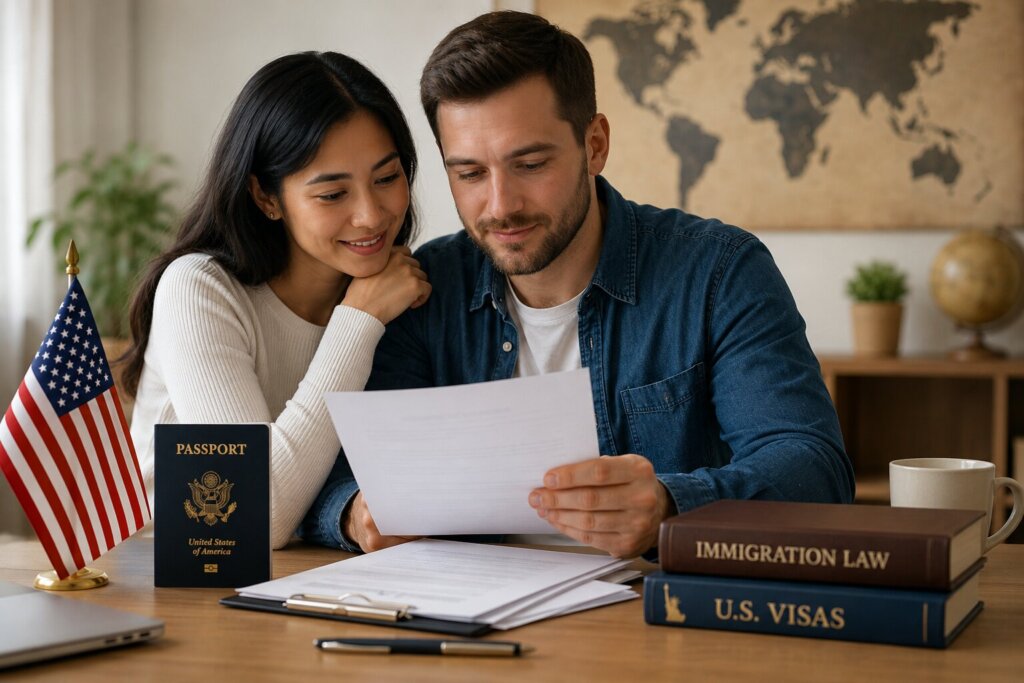
Getting a legit mail order brides relationship to the finish line means navigating a clear, step-by-step federal process. It’s not complicated once you know the sequence, but skipping any stage creates delays that can set a couple back by months. Here’s how it works from first contact to green card:
The full process, from first USCIS filing to green card, realistically takes two years or more. Patience is part of the deal. Up next: where in the world this process runs into legal friction.
In most of the world, mail order brides legal status is a non-issue. There is one clear exception worth knowing.
The Philippines has the strictest rules of any country. Republic Act 10906, the Anti Mail-Order Spouse Act, prohibits businesses from matching Filipinos with foreign nationals for marriage. The law targets matchmaking operators, not individual users. Dating sites registered outside the Philippines fall outside its reach, which is why thousands of men marry Filipino partners every year without legal trouble. The practical workaround: get married outside the Philippines, including in the U.S., after she arrives on a mail order bride legal visa.
No Western country, including the U.S., Canada, Australia, or the UK, restricts international marriage in any meaningful way. The mail order brides scam risk exists everywhere, but that’s a consumer protection issue, not a legal one. Knowing the difference matters.
A lot of confusion around this topic comes from outdated assumptions. Here are the three we hear most often.
Myth 1: Mail order brides are just human trafficking.
✅ This conflates two different things. Are mail order spouse illegal because of trafficking concerns? No. Trafficking involves force or coercion. A woman who chooses to join a dating site and pursue marriage is exercising her own agency. U.S. law distinguishes sharply between the two.
Myth 2: You can literally buy a bride.
✅ No money changes hands between a man and a woman. Fees go to platforms and agencies. Is it legal to mail order a bride like ordering a product? That framing has no legal basis whatsoever.
Myth 3: The process is unregulated.
✅ IMBRA and VAWA create a detailed regulatory framework with background checks, written consent requirements, and visa scrutiny built in at every stage.
These myths persist partly because the term “mail order bride” sounds transactional. The legal reality is a regulated, documented, federally overseen process.
Mail order bride legal processes in the U.S. are built on two solid federal laws, a well-documented visa pathway, and protections for both partners at every stage. The Philippines is the one country where matchmaking businesses face restrictions, and even there, individual couples find a clear path forward. What trips most people up is not the law itself but the myths surrounding it. If you go in informed, follow the process, and use a legitimate service, there is nothing legally ambiguous about any of it. The question worth sitting with is not whether it’s legal, but whether you’re ready for a two-year journey to get there.

